
For Gulf exporters, market access in Egypt increasingly depends on compliance systems designed to protect consumers, ensure product quality, and tighten cross-border supply chain control. Egyptian import controls highlight GOEIC registration not as a formality, but as a prerequisite for imported goods to enter the market for trading purposes. Ministerial resolutions cited in an import compliance guide—Resolutions 991 of 2015, 43 of 2016, 44 of 2019, and 195 of 2022—frame factory and trademark registration as a mechanism to trace product source and verify compliance with approved technical standards and specifications. The same guidance warns that violations can have direct legal consequences, including suspension of customs clearance and legal liability for the importer, even when the importer is not the producer.
It also helps to separate two layers of controls that can affect lubricant shipments: (1) importer registration and (2) factory or trademark registration for certain goods. GOEIC, operating under Egypt’s Ministry of Trade and Industry, maintains a register of authorized importers and exporters, and it inspects imported goods at ports of entry such as Alexandria, Port Said, and Cairo Airport to verify conformity with Egyptian technical standards (ES). One GOEIC guide states that operating without GOEIC registration is illegal and can lead to detention of shipments at port, significant storage fees, and potential legal penalties. Importer eligibility requirements described in that guide include being legally registered in Egypt with a Commercial Registry certificate, holding a valid Tax Card, and ensuring the commercial activity stated in the registry matches the goods to be imported.
Quality Controls for Lubricants: Why Documentation and Traceability Matter
Quality controls and traceability expectations are reinforced by the logic of the factory register. In the GOEIC factory registration framework, eligible factories and trademark-owning corporations exporting to Egypt are registered in the Register of Factories, and registration is described as a prerequisite for release of products for trade purposes. The register is presented as an official database managed by GOEIC to document factories producing goods imported to the Egyptian market, enabling verification of product source and alignment with technical and health standards and approved specifications before marketing. A separate exporter-focused guide advises regular self-audits and readiness for potential inspections, emphasizing that maintaining high standards in facilities and documentation supports smoother registration outcomes and ongoing compliance.
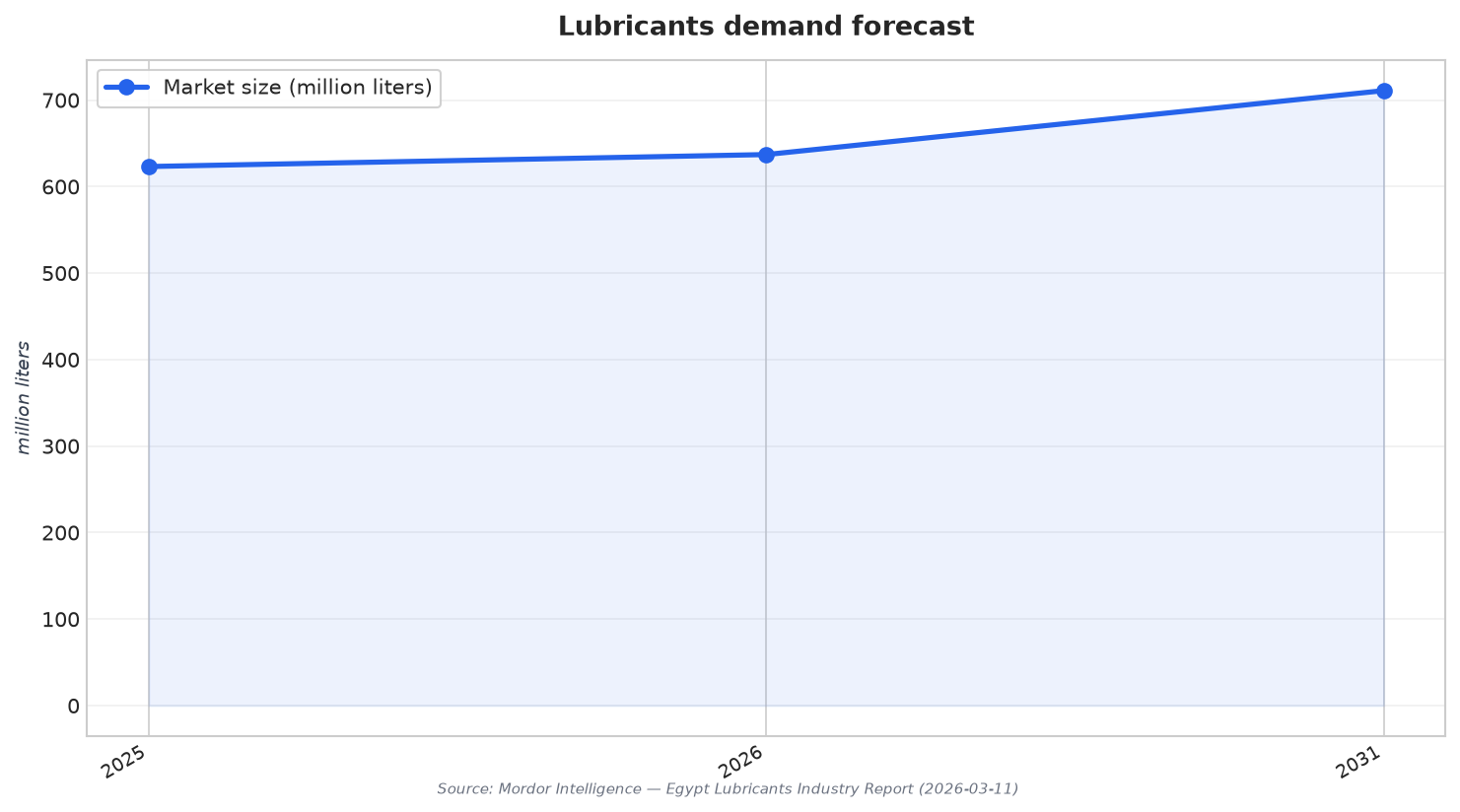
Commercially, lubricant exporters are targeting a market where volume and segment mix are actively tracked by industry research. One market report expects the Egypt lubricants market size to increase from 623.24 million liters in 2025 to 637.08 million liters in 2026, reaching 711 million liters by 2031, with a 2.22% CAGR over 2026–2031. In 2025, automotive engine oil led with 47.89% market share by product type, and automotive represented 61.12% of market size by end-user industry. The same report states mineral oil-based lubricants accounted for 66.28% share, while synthetic lubricants are expected to rise with a 3.12% CAGR during 2026–2031. These figures do not replace GOEIC rules, but they explain why consistent quality and conformity documentation becomes a competitive requirement, not only a legal one.
For Gulf exporters building an Egypt entry plan, the safest operational approach is to align three parties before shipping: your manufacturing or brand documentation (for the factory register pathway), your Egyptian importer’s GOEIC registration readiness, and your product’s ability to pass port conformity inspection against ES requirements. One GOEIC registration guide highlights how activity alignment is checked: if the Commercial Registry activity does not match the goods to be imported, GOEIC may require amendments before approval. In parallel, factory registration guidance describes the system as separating legal trade from prohibited trade, with customs clearance suspension as a key risk for non-compliance. This is where the Egypt GOEIC lubricant import registration topic becomes practical: it is about preventing a compliant product from becoming a stuck shipment.
What does GOEIC do that affects lubricant imports into Egypt?
Why is factory or trademark registration described as more than paperwork?
What are the consequences of violating GOEIC factory register rules?
How should Gulf exporters think about Egypt GOEIC lubricant import registration in practice?
What lubricant market signals make compliance and quality controls especially important in Egypt?